


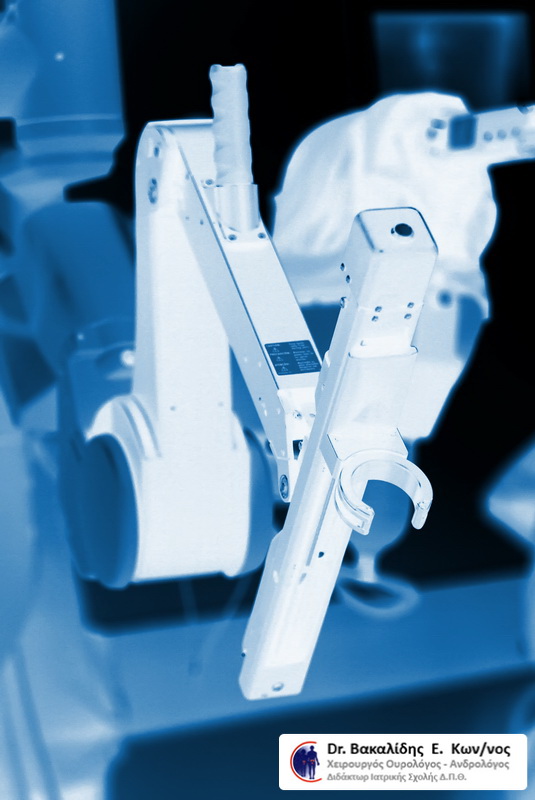
In the past, surgeons made large incisions in the skin and muscles to be able to see and operate on the areas directly, which is called open surgery. This type of approach is still practiced today, but specialists have come to be able to perform many urological procedures using laparoscopic and robotic-assisted surgery, possibly with da Vinci technology. Both types of minimally invasive surgical options require one or more small incisions through which doctors insert surgical equipment and a video camera. In the case of laparoscopic surgery, doctors use special instruments with a long arm to perform the operation while viewing magnified images taken by the laparoscope on a monitor.
Minimally invasive urological surgeries have evolved significantly since the first report of a laparoscopic nephrectomy in 1992. The robotic platform occupies the first place in oncological surgeries, and its effectiveness has been demonstrated repeatedly. Thanks to the benefits offered by robotic systems, the use of minimally invasive techniques has increased in the last decade; the robotic approach has become the standard in radical prostatectomy and partial nephrectomy for small kidney tumors.
Although in visual aspect robotic instruments resemble some laparoscopic instruments, they have the advantage of being articulated. Thus, the instruments not only open and close, but also turn and twist, allowing a more natural imitation of the human hand and joint, but of a much smaller size; many of the robotic parts are the size of a fingernail, allowing extremely small and precise incisions. Also, standard laparoscopic instruments are manipulated in reverse; the surgeon operates at one end that acts as a lever, but with the reverse action, if he presses right, the instrument will move to the left. The da Vinci robot does not have these limitations and the surgeon can perform any maneuver exactly as he normally does; if he turns his wrist to the right, the robot will perform the same movement, in three dimensions. Similar to laparoscopic procedures, patients are inflated with air in their lower abdomen; this pressure acts like an invisible hand that suppresses blood loss and gently moves the intestines away from the targeted area. Due to the increased visibility and magnification of the robotic cameras, surgeons can identify small bleeds, which leads to less blood loss. In this way, they also enjoy increased clarity, being able to identify the anatomy of the structures they are operating on, such as the edges of the prostate, urethra, nerves and blood vessels in the area.
The robot also allows for the transformation of hand movements, eliminating hand tremors and improving precision; thus, a large hand movement at the console can be translated into a very precise dissection or exposure. Last but not least, the fatigue experienced by the surgeon associated with the surgery is reduced because he can maintain a natural and comfortable position during the operation.
Procedures that can be performed with robotic-assisted surgery:
– Prostatectomy. Several studies have shown that there are greater chances of long-term survival for patients who undergo prostate surgery, compared to other treatments. Thus, those who benefited from radical prostatectomy had a 40% lower risk of death from prostate cancer, compared to patients who underwent radiotherapy. Robotic prostatectomy has demonstrated great success in protecting nerves and preserving erectile function, with reduced blood loss and minimal scarring.
– Partial and total nephrectomy. These robotic-assisted surgeries have demonstrated shorter operating times, reduced bleeding and shorter hospital stays, compared to open surgery.
– Excision of renal cysts
– Cystectomy. Although it is a long and complex procedure, it allows for fewer patient complications and inconveniences compared to extracorporeal options. Patients who have benefited from this procedure have experienced less bleeding, a lower rate of requiring blood transfusion, a reduced length of hospital stay and a reduced level of pain compared to open surgery.
– Pyeloplasty – surgery to restore the pyelo-ureteral junction in patients with obstruction at this level
– Ureteral implant – fixation of the tubes that connect the bladder to the kidneys
Your urologist surgeon will explain in detail what each surgical intervention involves, what preoperative preparation is required, and what complications may occur after surgery.